

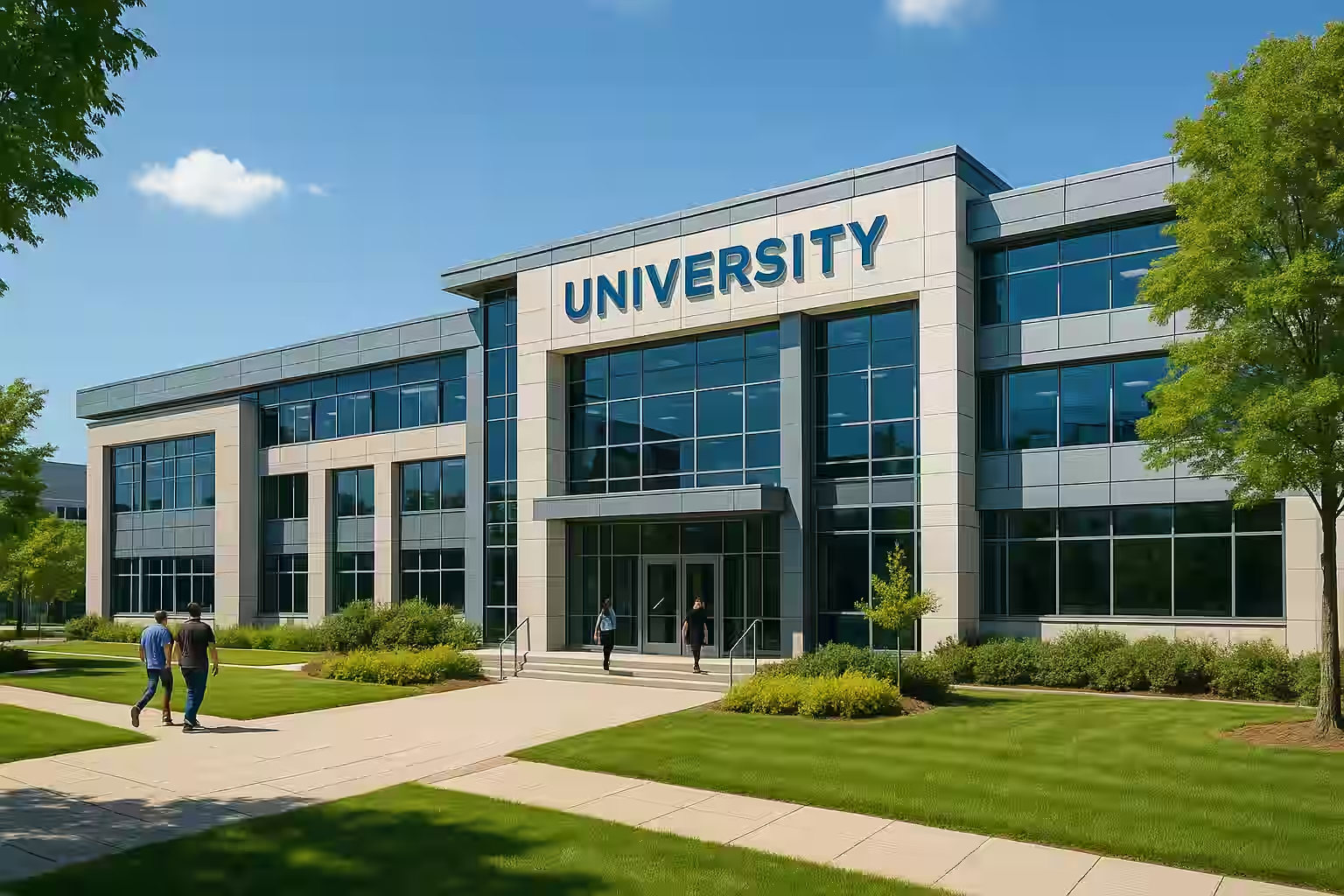
Bionic University Expands Community-Based IT Skill Programs in 2025
BIONIC University is an independent technology-training institution that focuses on preparing new-age learners for careers in the digital world. Founded in 2012, the institute has gradually built a reputation for offering modern and practical training models centered around tech skills, soft-skills development, and entrepreneurship.
In an era where technology is changing rapidly, BIONIC University aims to close the gap between traditional theory-driven education and real-world industry demand. The organization continues developing its learning structure to support students who are eager to enhance their digital skill sets and improve professional readiness.
Background & Approach
BIONIC University was created to help emerging talent understand the fundamentals of the tech industry. Rather than focusing only on classroom lectures, the institution emphasizes project-based learning, mentorship, teamwork, and real execution.
Since its establishment, the university has followed a progressive model where students gain both hard and soft skills. It regularly updates its curriculum to match global requirements, helping learners stay competitive.
BIONIC University does not follow the traditional academic pattern that focuses solely on theoretical topics. Instead, it offers sessions designed like real project scenarios. Students interact with trainers, industry mentors, and peers in group-based activities that reflect real working environments.
2025 Update: Growth of Community-Driven Learning
In 2025, the institution expanded its community-based learning formats. This includes workshops, coding circles, mentoring clubs, peer-learning groups, and small bootcamp cohorts.
These models are designed to support students at different stages of learning — beginners, intermediate learners, and aspirants preparing for professional roles.
The community-learning setup helps participants experience how people work in real corporate teams. Students practice communication, collaboration, idea sharing, and task management through structured activities.
As a result, learners gain exposure to hands-on development, real problem-solving patterns, and practical project understanding — much more than what traditional classroom-only models offer.
Skill Areas Covered
The institution primarily focuses on three core learning streams:
1. Tech Skills
This segment covers software fundamentals, programming languages, basic development workflows, and foundational product knowledge. Students receive guided training on building simple tools, apps, or prototypes that help them understand how real products function.
2. Soft Skills
Soft-skills programs focus on communication, teamwork, presentation skills, and leadership development. Students participate in group challenges where they must share ideas, explain solutions, and adjust to feedback — key skills needed in real-world technical roles.
3. Entrepreneurship
This track introduces the basics of business thinking, product creation, financial modeling, and customer needs. Students learn how tech ideas can be shaped into market-ready solutions.
Together, these three tracks help students approach the tech industry not only as coders but also as problem-solvers.
Training Methodology
The institution follows a flexible learning structure that includes:
- Instructor-led classes
- Live mentoring
- Assignments
- Workshops
- Group challenges
- Hands-on mini-projects
Students are encouraged to learn continuously, ask questions, and work with realistic tasks.
These learning modules provide a deeper understanding of how digital products and tech teams operate.
Industry Collaboration
Over time, the university has collaborated with various well-known technology companies to support learning programs. These collaborations have contributed to:
- Guest workshops
- Mentor interactions
- Industry-aligned modules
- Guidance about real product development
These partnerships help students understand how modern companies build solutions, interact with clients, and manage technology workflows.
Practical Learning Experience
One of the biggest advantages of BIONIC University is its emphasis on practical understanding.
Students often work on guided projects, tech tasks, demos, and small assignments intended to build technical confidence.
This approach highlights:
- Problem analysis
- Task breakdown
- Logical design
- Testing
- Communication
It helps learners improve how they think and execute within a team setting.
Community Impact
Because the learning format is community-driven, students also create long-term networks.
They connect with fellow learners, mentors, and experts who guide them throughout their development journey.
As the digital economy keeps growing, such ecosystems are becoming more important for shaping job-ready talent.
Mission & Long-Term Vision
BIONIC University aims to make modern tech education accessible and practical.
Its mission centers around strengthening digital talent by helping learners:
- Gain hands-on tech exposure
- Develop problem-solving skills
- Build confidence
- Become career-ready
The institution’s long-term vision includes promoting:
- Innovation
- Practical education
- Entrepreneurial thinking
- Independent problem-solving
These qualities help learners contribute effectively to the global technology community.
Conclusion
As modern industries continue to demand trained digital talent, practical institutions like BIONIC University are playing a stronger role.
With its 2025 expansion into community-driven learning formats, guided training, and hands-on project development, the institution continues supporting new learners who want to grow in the technology field.
From tech fundamentals to teamwork and entrepreneurial thinking, the university provides a balanced structure that helps learners build both skill and confidence — preparing them for real working environments and future career opportunities.

